Veterinary diagnostics have come a long way in recent years, and one of the most versatile, non-invasive tools available today is the ultrasound. At our animal hospital in Renton, WA, veterinary ultrasounds allow us to look beneath the surface and gain crucial insights into your pet’s health, all without surgery or sedation in most cases. From identifying organ abnormalities to diagnosing hidden internal conditions, ultrasounds play a key role in improving the quality of care we provide.
Understanding Veterinary Ultrasound Technology
Ultrasounds use sound wave technology to create real-time images of a pet’s internal organs. It’s fast, safe, and doesn’t require radiation.
What Is a Veterinary Ultrasound?
Ultrasound, or ultrasonography, is a diagnostic imaging method that uses high-frequency sound waves to produce moving images of the inside of the body. In pets, this non-invasive tool is used to view the heart, liver, kidneys, bladder, intestines, reproductive organs, and even blood vessels.
It works by sending sound waves through soft tissues. As these waves bounce back to the probe, the machine converts them into images on a screen. The result is a real-time view of what’s going on inside your pet—without the need for cuts or incisions.
How It Works: Sound Waves and Real-Time Imaging
During a veterinary ultrasound:
- A small handheld device (transducer) sends sound waves into the body
- The waves echo back differently depending on the tissues they strike
- These echoes are interpreted into live, moving images on a screen
Ultrasound imaging is dynamic, meaning the veterinarian can observe movement, blood flow, or function in real time. This is especially helpful for heart conditions (echocardiography) or gastrointestinal issues.
Why Ultrasounds Are Preferred for Non-Invasive Diagnostics
Unlike X-rays, which are static and best suited for bones or dense materials, ultrasounds are ideal for:
- Detecting fluid buildup
- Observing organ texture and size
- Monitoring fetal development
- Guiding biopsy procedures safely
This painless, radiation-free technique is suitable for repeated use—perfect for ongoing monitoring of chronic conditions.
Common Conditions Diagnosed Using Ultrasound in Pets
Ultrasounds are used for a wide variety of diagnostic purposes. They’re especially valuable when pets show symptoms that aren’t easily explained.
Internal Organ Assessment: Liver, Kidneys, Bladder & More
Veterinary ultrasounds give detailed insight into the size, shape, and consistency of internal organs, helping identify conditions like:
- Liver disease or fatty liver
- Kidney stones or chronic kidney failure
- Gallbladder or bile duct blockages
- Bladder inflammation or urinary stones
Even subtle changes in tissue density or organ positioning can be caught early with ultrasound, improving the chance of successful treatment.
Detecting Masses, Cysts, and Tumors
Ultrasounds help determine:
- The size and location of tumors
- Whether a mass is fluid-filled (cystic) or solid (tumorous)
- If surgical removal is possible or necessary
In some cases, a needle biopsy may be performed under ultrasound guidance, reducing the risk and increasing accuracy.
Emergency Use: Internal Bleeding or Foreign Objects
In emergency situations, ultrasound becomes invaluable:
- It can quickly detect internal bleeding, particularly in trauma cases
- It helps locate ingested foreign bodies before they cause blockages
- It allows for urgent surgical planning, improving survival rates
The Veterinary Ultrasound Process at Happy Tails Animal Hospital
We aim to make the diagnostic process as smooth and stress-free as possible for both pets and their owners.
What to Expect During the Appointment
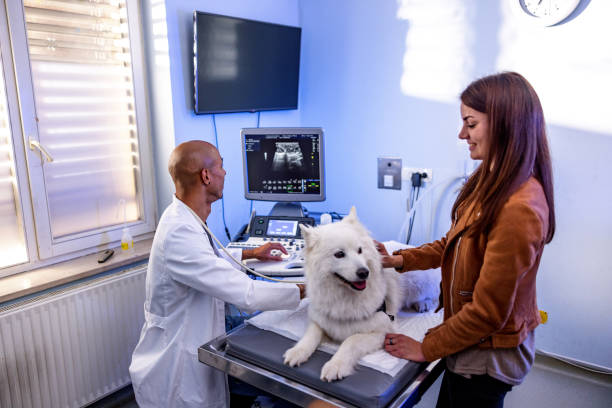
Here’s a typical flow of a veterinary ultrasound visit at our clinic:
- The pet is placed on a padded exam table
- The scan area is gently shaved
- A conductive gel is applied to the skin
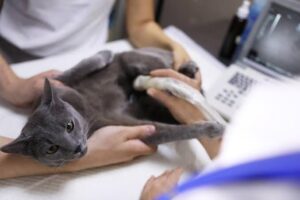
- The veterinarian moves the probe to capture live images
Owners may be present during the scan for reassurance. The whole process is calm and non-disruptive, taking around 30–45 minutes.
How Pets Are Prepped for the Procedure
Preparation depends on the type of ultrasound:
- Abdominal scans: Fasting (8–12 hours) may be required
- Bladder scans: A full bladder is preferred, so limited urination before arrival is advised
- Cardiac scans: Minimal preparation; no food restrictions usually needed
Shaving fur enhances image quality, and the ultrasound gel helps conduct sound waves through the skin.
Sedation and Comfort Considerations
Most pets tolerate the procedure well. However, sedation may be considered if:
- The pet is anxious or hyperactive
- Stillness is necessary for precise imaging
- A biopsy or guided procedure is performed simultaneously
Your pet’s safety and comfort are our top priority.
Benefits of Ultrasound for Pet Owners
Pet parents appreciate how quick and low-stress ultrasound scans are—and how quickly they get answers.
Non-Invasive and Painless
Ultrasound doesn’t require any cuts, stitches, or even anesthesia in most cases. This means:
- Zero recovery time
- Less risk of complications
- No hospitalization needed
It’s ideal for fragile or older pets who may not tolerate invasive procedures.
Fast, Accurate, and Real-Time Results
Our veterinarians can interpret results immediately during the exam. Benefits include:
- Immediate care planning
- Better understanding of your pet’s condition
- Faster start to treatment
This is especially valuable in emergencies or progressing conditions.
Reduces the Need for Exploratory Surgery
Before ultrasound, veterinarians often had to rely on guesswork or surgical exploration. Now, we can:
- Detect internal issues early
- Avoid unnecessary surgeries
- Guide procedures precisely
This translates to less stress for pets—and peace of mind for their owners.
Summary of Benefits:
- Safe and radiation-free
- Same-day answers
- No downtime required
- Ideal for routine and emergency use
Why Choose Happy Tails for Veterinary Ultrasounds in Renton
We combine medical precision with genuine compassion to deliver a complete diagnostic experience.
Our Advanced Imaging Technology
We use high-resolution ultrasound machines that produce:
- Crisp, clear images
- Better accuracy for diagnosis
- Fast scanning times with minimal discomfort
This technology helps us deliver excellent care without delay.
Experienced Veterinary Diagnostic Team
Our team includes veterinarians trained in advanced imaging. We:
- Stay current with best practices
- Interpret results on-site
- Coordinate with specialists if needed
You can trust that your pet’s scan is in expert hands.
Client-Focused Care for Peace of Mind
Communication is key. We:
- Walk you through every step of the procedure
- Explain findings in plain language
- Provide follow-up options and care guidance
You’re never left in the dark about your pet’s health.
Diagnostic Comparison Table:
| Feature | Happy Tails Animal Hospital | Standard Vet Clinics |
| High-resolution Imaging | ✅ Yes | ❌ Often Basic |
| Same-Day Results | ✅ Available | ❌ Delayed |
| On-Site Ultrasound Experts | ✅ Yes | ❌ Limited Access |
| Comprehensive Care After Diagnosis | ✅ Integrated | ❌ Referred Out |
When Should You Consider an Ultrasound for Your Pet?
Some symptoms require deeper investigation—and that’s when ultrasound steps in.
Signs and Symptoms That May Require Imaging
Don’t ignore signs like:
- Persistent vomiting or diarrhea
- Unexplained weight loss
- Lethargy or behavioral changes
- Difficulty urinating or defecating
- Swollen abdomen or visible discomfort
If your pet is experiencing any of these, a diagnostic ultrasound may uncover the root cause.
Preventive Screenings and Wellness Checks
Ultrasounds aren’t just for when your pet is sick. We recommend scans for:
- Geriatric wellness monitoring
- Breeding and pregnancy checks
- Chronic illness management
- Pre-operative evaluations
Early detection helps avoid bigger issues down the road.
Book Your Pet’s Ultrasound at Happy Tails Today
Whether you’re facing a health concern or just want peace of mind, we’re here to help.
Easy Appointment Scheduling
Booking an appointment is simple. Call, visit our website, or speak with our friendly front-desk team.
We offer:
- Same-day availability (when possible)
- Convenient weekday and weekend hours
- Prompt diagnostic turnaround
What to Bring and How to Prepare
Bring along:
- Your pet’s medical history
- Previous test results or images
- A list of current medications
We’ll provide fasting instructions or special prep as needed. Feel free to ask any questions in advance.
Reach Out for Personalized Guidance
Every pet is different, and so is every ultrasound. Our team offers compassionate support and custom diagnostic plans. If you suspect your pet may need an ultrasound, don’t wait.
Contact Us today to speak with our veterinary professionals and schedule your visit.
Frequently Asked Questions (FAQs)
1. What does a veterinary ultrasound diagnose?
It identifies problems in organs like the liver, kidneys, bladder, heart, and spleen. It also detects tumors, fluid accumulation, and pregnancies.
2. Are ultrasounds safe for pets?
Yes. They’re non-invasive, radiation-free, and suitable for both cats and dogs—even repeatedly for chronic care.
3. How long does a veterinary ultrasound take?
Most scans take between 20 and 45 minutes depending on the area of focus.
4. Will my pet need to be sedated?
Only if your pet is highly anxious or a biopsy is involved. Most pets do well without any sedation.
5. Where can I get a veterinary ultrasound in Renton?
At Happy Tails Animal Hospital, we offer expert ultrasound services using advanced diagnostic equipment and a caring touch.